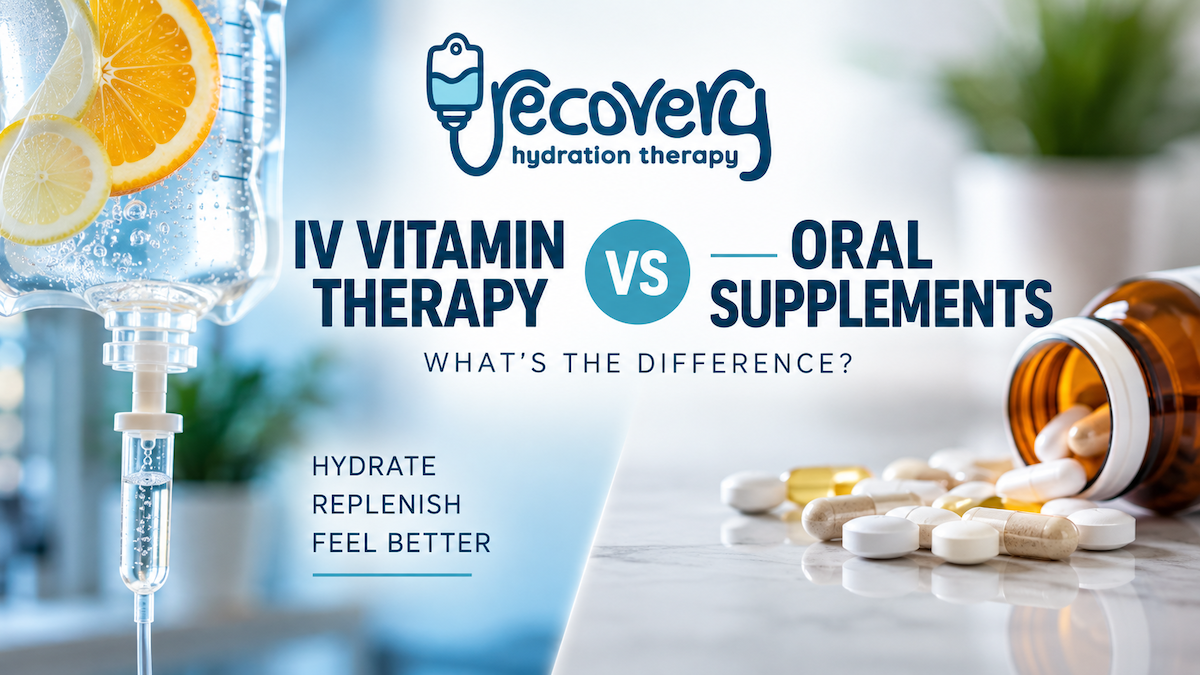
Vitamin supplements are widely used to support nutrition and wellness, but how those nutrients enter the body can vary significantly depending on whether they are taken orally or administered intravenously.
Oral vitamins must pass through the digestive system before nutrients can be absorbed and used by the body. IV vitamin therapy takes a different route, delivering fluids and selected nutrients directly into the bloodstream under professional supervision.
That difference in delivery is one reason people explore vitamin IV drips when hydration, convenience, or direct nutrient administration is a priority. However, IV therapy and oral supplements serve different purposes, and one is not automatically the right choice for every person or every wellness goal.
At Recovery Hydration Therapy, treatment begins by considering the individual’s needs and determining whether IV therapy is an appropriate option.
How IV Therapy Bypasses the Digestive System
Bioavailability refers to the proportion of a substance that reaches circulation and is available for the body to use.
When vitamins are taken orally, they travel through the gastrointestinal tract. Absorption can vary depending on the nutrient itself as well as factors such as digestive health, medications, food interactions, age, and individual physiology.
For example, the National Institutes of Health Office of Dietary Supplements explains that absorption of vitamin B12 from oral supplements varies considerably depending on dosage. At higher supplemental doses, only a small percentage of B12 may be absorbed.
Intravenous administration bypasses the gastrointestinal absorption process by delivering nutrients directly into circulation. This allows IV-administered nutrients to reach the bloodstream without first depending on absorption through the digestive tract.
That does not mean oral vitamins are ineffective. Oral supplementation can be an appropriate and convenient way to support nutritional needs, while IV administration may be considered when direct delivery, hydration, or a professionally administered treatment is desired.
Direct IV Delivery vs. Digestive Absorption
One of the primary differences between a vitamin IV drip and an oral supplement is predictability of delivery.
Oral absorption can vary considerably between individuals. Certain vitamins are also absorbed differently depending on dosage, formulation, diet, and other factors.
Research published through the National Library of Medicine has also demonstrated that intravenous and oral administration can produce substantially different blood concentrations of certain nutrients. In a pharmacokinetic study of vitamin C, intravenous administration produced significantly higher peak plasma concentrations than oral administration.
IV administration avoids those gastrointestinal variables. Once administered intravenously, the selected nutrients enter circulation directly rather than first passing through the digestive absorption process.
For people who experience gastrointestinal discomfort from certain oral supplements, discussing alternative forms of supplementation with a healthcare professional may also be worthwhile.
Hydration Is Another Important Difference
A vitamin IV drip isn’t only about vitamins.
IV treatments can also provide fluids and electrolytes, making hydration an important component of many formulations. This distinguishes IV therapy from taking a vitamin capsule or tablet with a glass of water.
Recovery Hydration Therapy’s Vitamin Booster IV therapy combines hydration with selected vitamins and nutrients for patients seeking professionally administered wellness support.
Depending on the service, an IV may incorporate fluids, vitamins, minerals, electrolytes, or other ingredients. This personalized approach allows healthcare professionals to provide treatment based on the patient’s needs rather than relying on a standardized over-the-counter formulation.
Why People Choose Vitamin IV Drips
Some patients choose IV therapy as part of their overall wellness routine. Others may be interested in hydration and nutrient support during periods of travel, demanding schedules, or increased physical activity.
The important distinction is that IV therapy should not be viewed as a universal replacement for a healthy diet or appropriate oral supplementation.
Instead, it provides another method of administering selected nutrients and fluids when appropriate for the individual.
Vitamin IV Therapy for Athletic and Physical Recovery
Hydration and electrolyte balance are particularly important for physically active individuals.
Following strenuous activity, some people choose IV hydration therapy as a convenient way to receive fluids and selected nutrients under professional supervision.
Individual recovery needs vary, and IV therapy should be considered one component of an overall recovery strategy that may also include adequate nutrition, sleep, hydration, and appropriate medical care.
Vitamin IV Therapy and Migraine Support
Hydration status and certain nutrients, including magnesium, have been studied in relation to migraine management.
For individuals experiencing migraines, IV therapy may provide a method of administering fluids and selected ingredients directly into circulation. However, migraines can have numerous causes, and treatment needs vary considerably between individuals.
IV therapy should not be considered a replacement for appropriate diagnosis or medical treatment. Patients experiencing frequent, severe, or changing migraine symptoms should discuss those symptoms with a qualified healthcare provider.
Vitamin IV Therapy for Immune and Wellness Support
Vitamin C, zinc, and other nutrients play established roles in normal immune function. Maintaining appropriate nutrient levels is one part of supporting overall health.
Vitamin IV therapy provides one method for delivering selected nutrients directly into circulation. Patients interested in immune or general wellness support can discuss available formulations with the Recovery Hydration Therapy team to determine whether an IV treatment is appropriate for their individual circumstances.
Rather than promising that an infusion will prevent illness or “boost” immunity beyond normal function, the goal is to provide professionally administered hydration and nutrient support based on the patient’s needs.
Are Vitamin IV Drips Better Than Pills?
There isn’t a universal answer.
The major advantage of IV administration is that it bypasses gastrointestinal absorption and delivers fluids and selected nutrients directly into circulation. Oral supplements, meanwhile, are convenient, inexpensive, and may be entirely appropriate for routine supplementation.
The better option depends on why supplementation is being considered, the nutrient involved, the individual’s health, and the recommendations of a healthcare professional.
For some people, oral vitamins may be sufficient. Others may value the direct delivery, hydration, professional administration, and customized treatment options available through vitamin IV therapy.
The most important consideration isn’t simply whether an IV or pill is “better.” It’s choosing an approach that is appropriate for the individual’s health and wellness goals.
Professionally Administered Vitamin IV Therapy
IV therapy is a medical procedure and should be treated accordingly.
At Recovery Hydration Therapy, patients receive care from qualified healthcare professionals who evaluate treatment considerations and administer IV therapy using appropriate clinical procedures.
This professional oversight is especially important because IV therapy may not be appropriate for everyone. Medical history, current medications, health conditions, allergies, and other individual factors can influence whether a particular treatment or ingredient is suitable.
Choosing the Right Approach for Your Wellness Goals
Vitamin IV therapy and oral supplements don’t need to be viewed as competing approaches.
Both can have a place in an individual’s overall health and wellness strategy. What makes IV therapy different is the ability to deliver fluids and selected nutrients directly into circulation while providing treatment under professional supervision.
If you’re interested in learning whether a vitamin IV drip may be appropriate for your wellness, hydration, or recovery goals, Recovery Hydration Therapy can help you explore available options and determine an appropriate treatment approach.
Ready to Explore Vitamin IV Therapy?
Interested in seeing whether IV vitamin therapy fits your wellness, hydration, or recovery goals? Recovery Hydration Therapy offers professionally administered IV treatments personalized to your individual needs. Contact our team to learn more and find the right option for you.
Frequently Asked Questions
How fast do you feel the effects of a vitamin IV drip?
Experiences vary depending on the individual and the type of treatment received. Because IV therapy delivers fluids and selected nutrients directly into circulation, some patients report feeling hydrated or refreshed during or after treatment. Individual results can vary, and specific effects should not be guaranteed.
Are vitamin IV drips safe?
Vitamin IV therapy is generally well tolerated by appropriate candidates when administered by qualified healthcare professionals using proper clinical procedures. However, IV therapy is not appropriate for everyone and, like any medical procedure, can involve risks. A patient’s health history and individual circumstances should be considered before treatment.
How often should I get a vitamin IV drip at Recovery Hydration Therapy?
There is no single treatment schedule that’s appropriate for everyone. Frequency depends on the individual’s goals, health considerations, treatment type, and provider recommendations. The Recovery Hydration Therapy team can help determine an appropriate schedule based on each patient’s individual needs